
Eye On A.I.
In 5 to 10 Years, Using Weapons Without AI Will Be Considered Unethical | Yaroslav Azhnyuk, The Fourth Law
A Ukrainian entrepreneur who spent 14 years building cameras for pets pivoted to building cameras that down Shaheds, and is now building the autonomy software that could define how wars are fought for the next generation. Yaroslav Azhnyuk, co-founder of Fourth Law, joins Craig Smith in Kyiv to explain why Ukraine has become what he calls the Defense Valley or the Florence of Defense: a dense, fast-...

Inside Ukraine's Azov Drone R&D: The Engineer Building AI Weapons 18 km From the Front Line | Alexander Palamarchuk
The most consequential arms race in the world right now isn't nuclear, it's software. Craig Smith speaks with Alexander Palamarchuk, an engineer in the R&D department of Ukraine's Azov Brigade, calling in from approximately 18 kilometers from the front line in the Pokrovsk region. What emerges is one of the most technically candid accounts available of what drone warfare actually looks like from th...
95% of AI Agent Projects Fail to Reach Production. Here's Why | Manoj Saxena, TrustWise
It takes a few hours to build an AI agent. It takes six to seven months to get it into production. Manoj Saxena - the executive who commercialized IBM Watson - built TrustWise around one thesis: intelligence without control is not deployable. In this episode, he joins Craig Smith to explain why 95% of enterprise AI agent projects are stalling between pilot and production, and why the answer has not...
From Zero to 150 Robots in Just 20 Months | Mike LeBlanc, Foundation Future Industries
Most humanoid robot companies are still running curated demos in replica environments. Foundation Future Industries is running 150 robots on real automotive production lines in Georgia, and heading to Ukraine this year to deploy on the battlefield. Mike LeBlanc, the co-founder of Foundation Future Industries - currently the only company supplying humanoid robots to the US Department of Defense, wit...
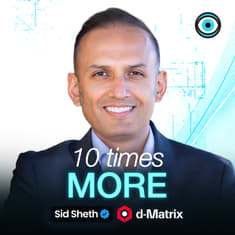
Why People Are Paying 10x More for AI - and What That Means for the Chip Market | Sid Sheth, d-Matrix
The AI chip market looks monolithic from the outside - NVIDIA dominates, and everyone else is fighting for scraps. But d-Matrix's CEO Sid Sheth argues that the market is quietly splitting into two distinct tiers, and the one that's exploding right now is the one NVIDIA's architecture isn't built for. In this episode, Sid joins Craig Smith to explain the "premium token economy": a new class of AI in...
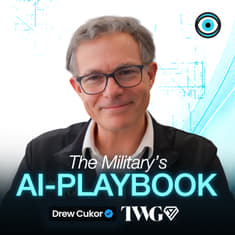
American Companies Have 36 Months to Go AI-Native or Get Left Behind | Drew Cukor, TWG AI
The same tools that slowed the U.S. military down in Afghanistan (PowerPoint, Excel, email, and Word) are now slowing American businesses down in the AI race. Drew Cukor spent 30 years as a Marine intelligence officer, helped build Project Maven into a battlefield command and control system, served as Chief Data Officer at JP Morgan, and is now leading AI transformation at TWG AI. In this episode, ...

In 5 Years, 90% of What You Use AI For Will Run on Your Smartphone | Paolo Ardoino, Tether
Hundreds of billions of dollars are flowing into AI data centers right now, and Paolo Ardoino, CEO of Tether - the company behind the world's most widely used stablecoin with 573 million users - thinks that investment is going to age very badly. In this episode, he joins Craig Smith to explain QVAC, Tether's open-source platform for running AI on smartphones, laptops, and edge devices, and to make ...
Why People Are Paying 10x More for AI | Sid Sheth, d-Matrix
The AI chip market looks monolithic from the outside - NVIDIA dominates, and everyone else is fighting for scraps. But d-Matrix's CEO Sid Sheth argues that the market is quietly splitting into two distinct tiers, and the one that's exploding right now is the one NVIDIA's architecture isn't built for. In this episode, Sid joins Craig Smith to explain the "premium token economy": a new class of AI in...
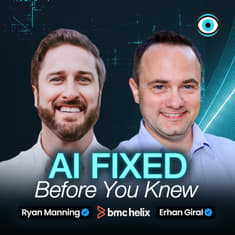
AI Agents Fixing Your IT Before You Even Know Something Broke | Erhan Giral & Ryan Manning, BMC Helix
Most enterprise IT teams spend the majority of their time fighting the same fires repeatedly. BMC Helix is building the AI system that handles those fires automatically, detecting anomalies, tracing root cause through millions of asset relationships, generating remediation plans, and learning from every incident it resolves. Craig Smith sits down with Erhan Giral, VP of AI Strategy and Innovation a...
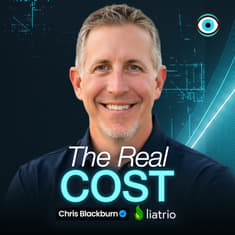
Real AI Transformation Costs HALF of Everyone's Salary for 2 Years | Chris Blackburn, Liatrio
Most companies think they're transforming with AI. They're not, and the gap between what they believe and what's actually happening on the ground is costing them far more than they realize. In this episode, Craig Smith sits down with Chris Blackburn, founder and CEO of Liatrio, a consultancy that has spent a decade embedding directly inside large enterprises to help them actually change how they wo...
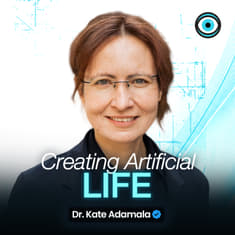
"According to NASA's Definition of Life, I'm Not Alive" - Why Nobody Can Define Life | Dr. Kate Adamala
Nobody has ever built a cell from scratch - assembled entirely from purified molecules on a shelf - that can feed itself, grow, and split into daughter cells through its own genetic activity. Until now. Dr. Kate Adamala, a synthetic biologist and a professor of genetics at the University of Minnesota, whose lab just published a landmark paper on what she calls "spud cells," joins Craig Smith to exp...
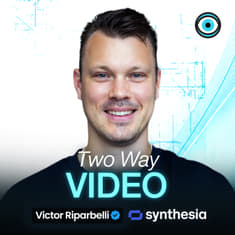
Video Is About to Stop Being One-Way (and That Changes Everything) | Victor Riparbelli, Synthesia
Every company is creating content that nobody reads, nobody watches, and nobody remembers, and the CEO of the AI platform that 90% of Fortune 100 companies use to fix that just explained what comes next. In this episode, Craig Smith sits down with Victor Riparbelli, co-founder and CEO of Synthesia, to discuss the $4 billion company that is now redefining what video communication means for the enter...
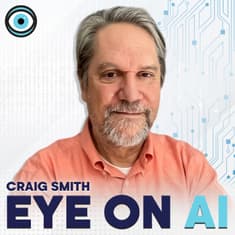
Video Is About to Stop Being One-Way (and That Changes Everything) | Victor Riparbelli, Synthesia
Every company is creating content that nobody reads, nobody watches, and nobody remembers, and the CEO of the AI platform that 90% of Fortune 100 companies use to fix that just explained what comes next. In this episode, Craig Smith sits down with Victor Riparbelli, co-founder and CEO of Synthesia, to discuss the $4 billion company that is now redefining what video communication means for the enter...
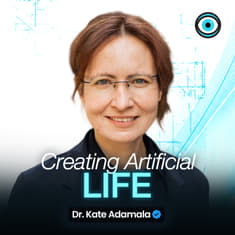
"According to NASA's Definition of Life, I'm Not Alive" - Why Nobody Can Define Life | Dr. Kate Adamala
Nobody has ever built a cell from scratch - assembled entirely from purified molecules on a shelf - that can feed itself, grow, and split into daughter cells through its own genetic activity. Until now. Dr. Kate Adamala, a synthetic biologist and a professor of genetics at the University of Minnesota, whose lab just published a landmark paper on what she calls "spud cells," joins Craig Smith to exp...